Autumn Update: From Feasibility to Delivery
Co-founder of Forest City and co-founder of Looking For Growth.
Co-founder of Forest City and former investigative journalist at The Guardian.
Hello to all those interested in how the plans for the UK’s first city in 50 years are developing.
One year ago, we stood on stage at the O2 in front of 1,200 people and announced that we wanted to build a new city. Plenty of people expected the idea to last a month. Instead, the project has grown up fast. When we last wrote in July, Forest City had a full 300 page feasibility study written by volunteer experts.
Since then, it has moved into a different phase. Professional teams are now working in parallel on master planning, the business case, the economic case, the design of our first homes, and engagement with everyone from parish councils to Whitehall. Their job is simple: test every assumption we’ve made and tell us where we’re wrong.
So far, the answers have been encouraging. One of our consultants, a former senior MHCLG official, told us he’d thought the idea was bonkers when he first saw it. Having dug into the detail, he’s now a complete convert. We’ve heard almost exactly the same thing from others with decades of experience. People who spend real time with the evidence tend to end up where we did.
From vision to maps
The master planning work has given us the first set of professional maps of Forest City in its wider context. They show where the city fills a natural gap in the East of England, how it connects with the surrounding landscape, and how it plugs into existing rail and water infrastructure.
Alongside the maps sits a first approach to phasing. It starts with water and nature, then homes. We’re not publishing them yet, but they turn the vision into something tangible, visual and practical.
The numbers stack up
In parallel, independent consultants have been stress-testing our business model and the funding needed for the early phases. The numbers coming back are looking positive. That matters, because the whole project rests on the municipal model: the city captures the land value it creates and uses it to pay for infrastructure before the homes arrive.
Our economic consultants have completed a first draft of the formal economic case. It is built to the Green Book standard that HM Treasury uses to assess major projects. The early read is very strong. It also asks the right hard questions, like how fast homes can realistically be built in one place and what workforce and supply chain that needs. Thankfully, we’ve got good answers to everything that has come up so far!
Water: an old idea whose time has come
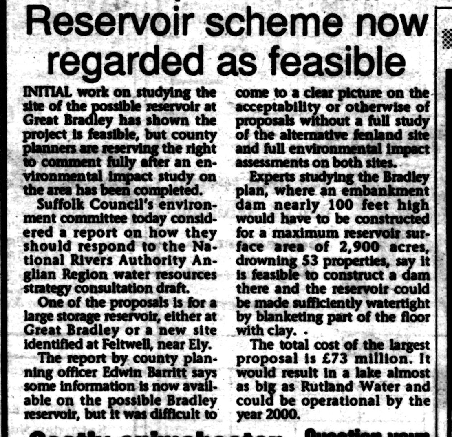
A reservoir on this site isn’t new. It was proposed in the 1960s, and again in the 1990s by the National Rivers Authority.
Our research has shown that the reservoir was deemed technically feasible then. Our initial engagement with engineering firms and other related bodies tells us it’s feasible now. Questions remain, including the right fill level and ground conditions under parts of the site. There are workable options, such as a lower fill level or a series of smaller reservoirs. Read more on our water plan.
One unexpected lesson from this work is just how useful AI has become. We’ve used it to build interactive tools for experimenting with water levels and reservoir types, and to plot decades of existing data onto maps in hours rather than weeks. Some of the consultants we work with have been genuinely blown away. It’s saving a huge amount of time and effort that would otherwise be done by hand. For a project of this scale, this could have massive impacts on delivery pace and cost.
A house we believe in
At its heart, Forest City is about fixing a broken social contract. It’s the promise that if you work hard, you can buy a home and raise a family near where the jobs are. For a generation, that promise has been broken. Our first home is where we start keeping it: a beautiful four-bedroom family home for around £350k.
Getting it right matters enormously, so we’ve taken our time. We went through a number of different designers before finding one we’re confident can deliver a home that is modern, beautiful and in keeping with its location.
The latest iteration of the home’s design draws on traditional elements from Cambridgeshire and Suffolk, while looking and feeling new. All the material costings are back, and we know it can be built to sell at £350k. We’ll share images, and open sign-ups for people who want one of these homes, as soon as they’re ready. More on the homes.
Making the case in public
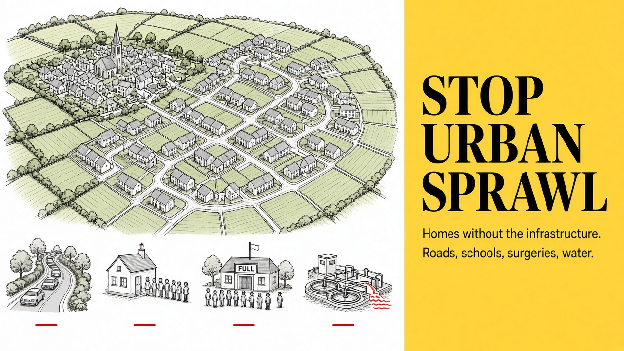
The technical work only matters if people want it. Government targets mean around 1.3 million homes need to be built across the East of England over the next 30 years. Around 366,000 of those fall within 30 miles of the site, whether Forest City happens or not. The real question is not whether they get built but how they get built: in one place with infrastructure from day one, or spread across the edge of every village and market town.
That’s why we launched Stop Urban Sprawl. It calls for growth to be concentrated, with schools, GPs, water, energy and transport built in from the start. Over 2,000 people from the region have already signed. If you live in the area, please add your name.
We took the same argument to Labour Party conference in Liverpool. There, we partnered with the think tank Demos to launch A New Civic Generation, co-authored by Demos’s Lucy Bush, writer Elle Griffin and our own Priti Billimoria. The paper makes the case for community-owned trusts that keep the value of new places in those places. We launched it at a packed fringe event, 21st Century Municipalism, with our advisory board chair Dame Patricia Hewitt on the panel.
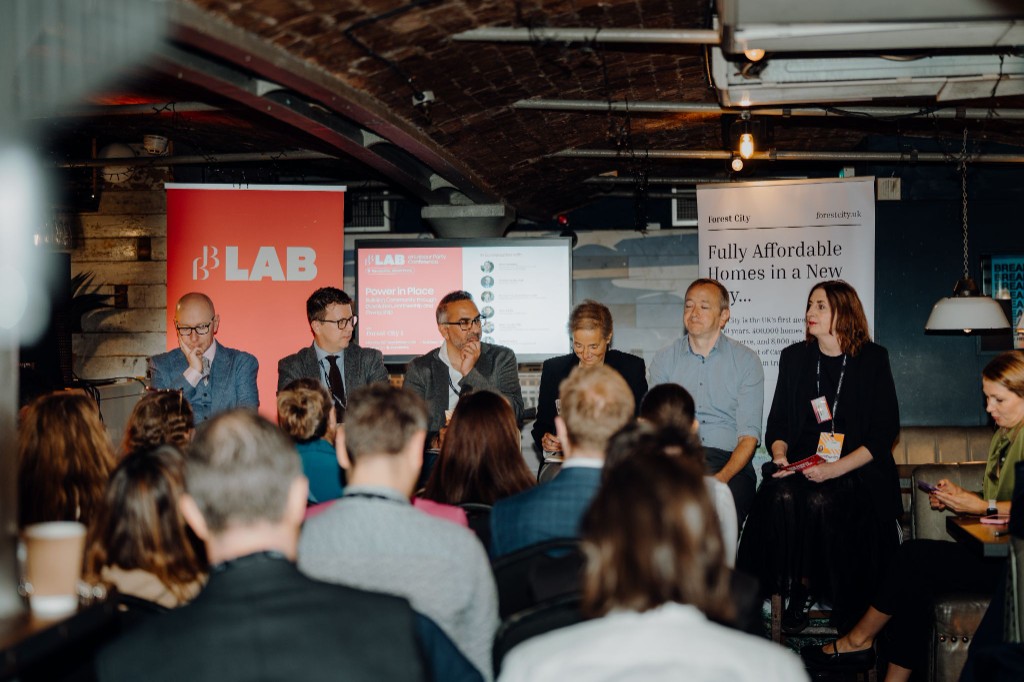
If you’d rather see the idea than read it, Elle has turned it into a lovely illustrated guide, The City That Owns Itself. Shiv also spoke at Power In Place, our BB Labs panel on how community ownership, co-ops and land trusts can build stronger places, alongside Patrick Hurley MP, a former No. 10 devolution director, and the heads of the Esmée Fairbairn Foundation, Lloyds Bank Foundation and Co-operatives UK.
In case you missed it
We’ve also launched a podcast, How To Build A City, starting with why Cambridge can’t simply grow outwards. We’ve published The Alternatives, an honest look at every other option for the region’s housing need, and 366,000 homes are coming. So how do we build them?. You can also read our speech at Great Wratting parish council from August. And if you’ve heard something about Forest City that doesn’t sound right, check claims answered.
What’s next
Over the coming months, expect the economic case, more on the master plan, and the house. If you’re interested in volunteering for a community coordination role, please reach out. Until then, the most useful thing you can do is sign and share Stop Urban Sprawl, and forward this to anyone who should be on this list.
Thank you, as ever, for your support.
— Joe, Shiv, and the whole Forest City team